Sodium Sulphate in Paper & Pulp Manufacturing
Sodium Sulphate is an important chemical in the kraft (sulfate) pulping process, where it serves as a makeup chemical in the chemical recovery cycle. During recovery, it is converted into sodium sulfide, an active component of white liquor used for wood delignification. Paper manufacturers evaluate Sodium Sulphate based on purity, moisture, insoluble matter, particle size, and supply consistency to help maintain stable recovery operations and efficient mill performance.
Table of Contents
Introduction
The Indian Paper & Pulp Industry
What Is Kraft (Sulfate) Pulping?
Why Sodium Sulphate Is Used
Chemical Recovery Cycle
Benefits for Paper Mills
Quality Requirements
Storage & Handling
Pan-India Supply
FAQs
Conclusion
Introduction
The paper and pulp industry depends on carefully controlled chemical processes to convert wood and other fibrous raw materials into pulp suitable for paper production. Among the different pulping technologies, the kraft process is the most widely used for producing strong pulp for packaging papers, writing papers, and many specialty grades.
Within this process, Sodium Sulphate is not used as a paper filler or coating chemical. Instead, it functions within the chemical recovery system, where it contributes to the regeneration of cooking chemicals required for continuous mill operation.
Because kraft mills operate continuously, consistent raw material quality and dependable supply are important considerations for procurement teams.
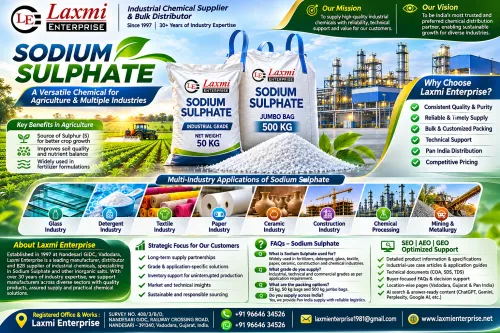
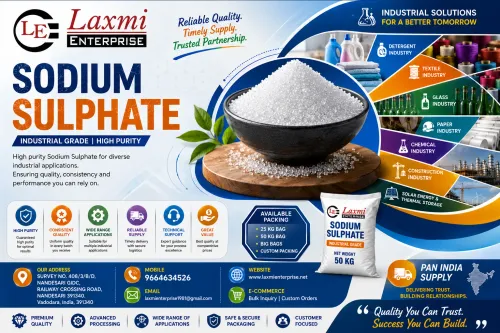
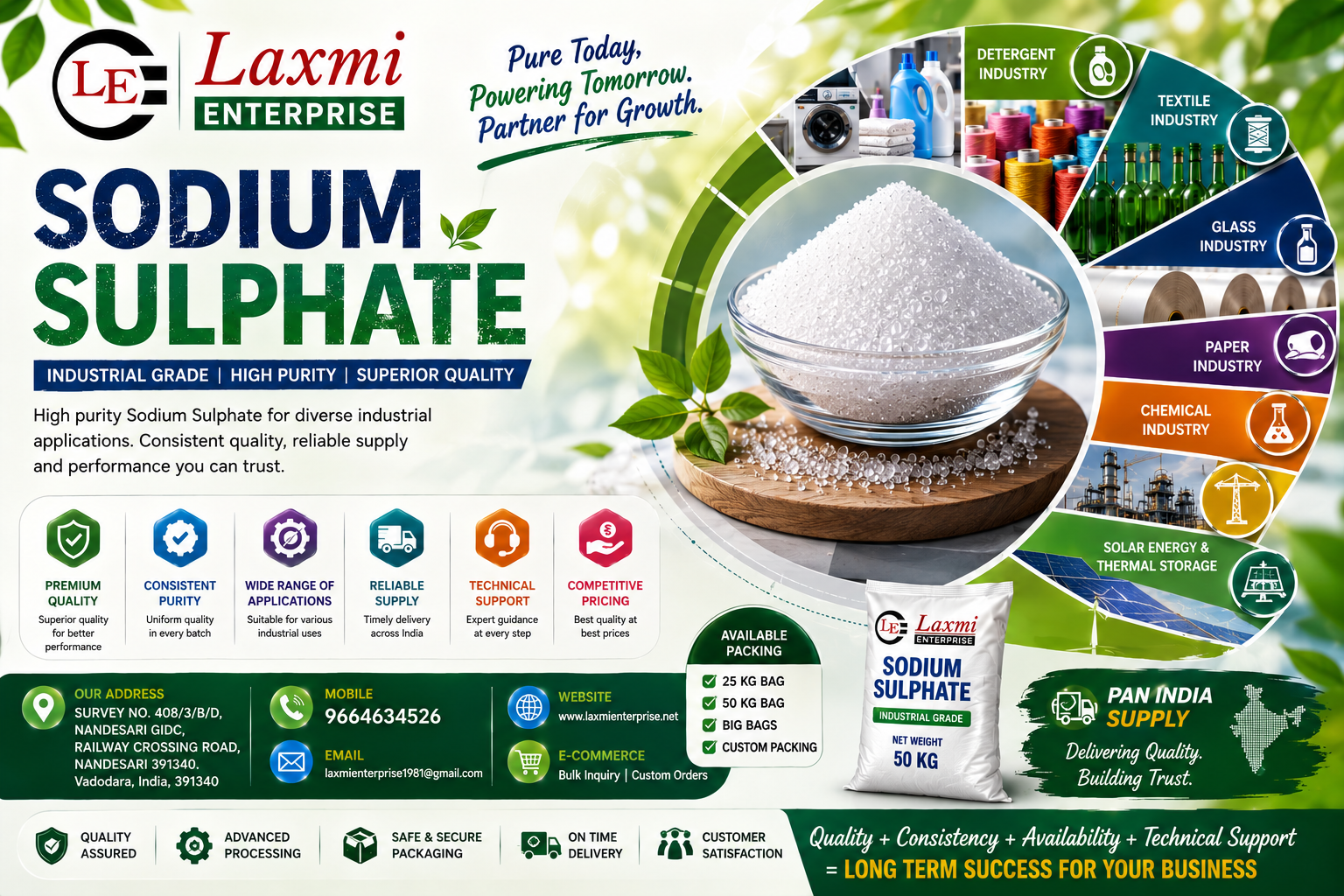
Industrial suppliers such as Laxmi Enterprise, located in Nandesari GIDC, Vadodara, Gujarat, support paper manufacturers across Pan India by supplying industrial-grade Sodium Sulphate with technical documentation and reliable logistics.
Overview of the Indian Paper Industry
India is one of the world's major paper-producing countries, manufacturing products such as:
Writing and printing paper.
Packaging board.
Kraft paper.
Corrugated box paper.
Tissue products.
Specialty papers.
Major paper manufacturing regions include:
Gujarat
Maharashtra
Uttar Pradesh
Punjab
Haryana
Tamil Nadu
Karnataka
Telangana
Andhra Pradesh
West Bengal
Odisha
Chhattisgarh
Large integrated mills often include their own recovery boilers and chemical recovery systems, where Sodium Sulphate plays a role in maintaining the chemical balance.
What Is the Kraft (Sulfate) Process?
Quick Answer
The kraft process converts wood chips into pulp by dissolving lignin while preserving cellulose fibres. This is achieved using a cooking liquor containing sodium hydroxide and sodium sulfide. Sodium Sulphate enters the process as a makeup chemical and is converted within the recovery cycle into sodium sulfide.
The kraft process generally includes:
Wood preparation.
Cooking (digestion).
Washing.
Screening.
Bleaching (where applicable).
Chemical recovery.
Energy generation.
One of the strengths of the kraft process is its integrated recovery system, which allows valuable chemicals to be regenerated and reused.
Why Is Sodium Sulphate Used?
Quick Answer
Sodium Sulphate is added to compensate for chemical losses that occur during mill operation. In the recovery furnace, it is reduced to sodium sulfide, helping maintain the composition of the white liquor used in subsequent cooking cycles.
Rather than being consumed directly in paper production, Sodium Sulphate supports the regeneration of active pulping chemicals.
Maintaining the correct chemical balance is important for:
Stable pulping conditions.
Recovery system efficiency.
Continuous mill operation.
The required addition rate varies by mill design, operating conditions, and chemical losses.
Understanding the Chemical Recovery Cycle
The chemical recovery system is one of the defining features of a kraft mill.
A simplified sequence is:
Wood Digestion
↓
Black Liquor Collection
↓
Evaporation
↓
Recovery Boiler
↓
Smelt Formation
↓
Green Liquor
↓
Causticizing
↓
White Liquor
↓
Digester
Within the recovery boiler, Sodium Sulphate is chemically reduced to sodium sulfide, becoming part of the regenerated cooking liquor.
This recovery loop reduces chemical consumption and improves overall process efficiency.
Why Recovery Chemistry Matters
Efficient recovery provides several operational benefits:
Reduced fresh chemical requirements.
Improved resource utilization.
Better operating economics.
Stable cooking liquor composition.
Continuous production.
Because the recovery cycle is interconnected, the quality of makeup chemicals should be consistent with mill requirements.
Quality Parameters for Paper Mills
Quick Answer
Paper manufacturers evaluate Sodium Sulphate based on its suitability for the recovery process rather than for direct paper formulation. Consistent purity and controlled impurity levels help support stable recovery operations.
Typical procurement parameters include:
Parameter Importance
Purity Consistent recovery chemistry
Moisture Storage and handling
Water-Insoluble Matter Operational cleanliness
Particle Size Handling characteristics
Appearance Incoming inspection
Batch Consistency Reliable mill operation
Exact specifications are established by individual mills according to their process requirements.
Storage and Handling
Proper storage practices help maintain product quality before use.
Recommended practices include:
Store in a dry warehouse.
Protect packaging from moisture.
Keep bags sealed until required.
Use pallets to reduce ground moisture exposure.
Rotate inventory using FIFO.
Inspect packaging during receipt.
These measures support efficient handling and reduce the risk of contamination.
Pan-India Supply
Paper mills are located across India's major industrial regions, including Gujarat, Maharashtra, Uttar Pradesh, Punjab, Haryana, Karnataka, Tamil Nadu, Telangana, Andhra Pradesh, West Bengal, Odisha, and Chhattisgarh.
Laxmi Enterprise, based in Nandesari GIDC, Vadodara, Gujarat, supplies industrial-grade Sodium Sulphate to customers across Pan India, providing product documentation, flexible packaging options, and logistics support for industrial procurement.
Frequently Asked Questions
Is Sodium Sulphate added directly to paper?
In the kraft process, Sodium Sulphate is primarily used within the chemical recovery system rather than as a direct paper additive.
Why is it called the sulfate process?
The historical name 'sulfate process' comes from the use of Sodium Sulphate as a makeup chemical in the recovery cycle, even though the active cooking chemicals are sodium hydroxide and sodium sulfide.
Does every paper mill use Sodium Sulphate?
No. Its use depends on the pulping technology employed. Mills using the kraft process have different chemical requirements from mills using other pulping methods.
Conclusion
Sodium Sulphate plays an important role in kraft pulping by supporting the regeneration of cooking chemicals within the chemical recovery cycle. Consistent product quality, reliable documentation, and dependable supply help paper manufacturers maintain efficient recovery operations and stable production.
For paper mills across India, sourcing from an experienced industrial supplier can contribute to consistent procurement and operational reliability. Laxmi Enterprise, located in Nandesari GIDC, Vadodara, Gujarat, supplies industrial-grade Sodium Sulphate to customers across Pan India, supporting the paper and pulp industry with quality-focused sourcing and technical documentation.
Keywords