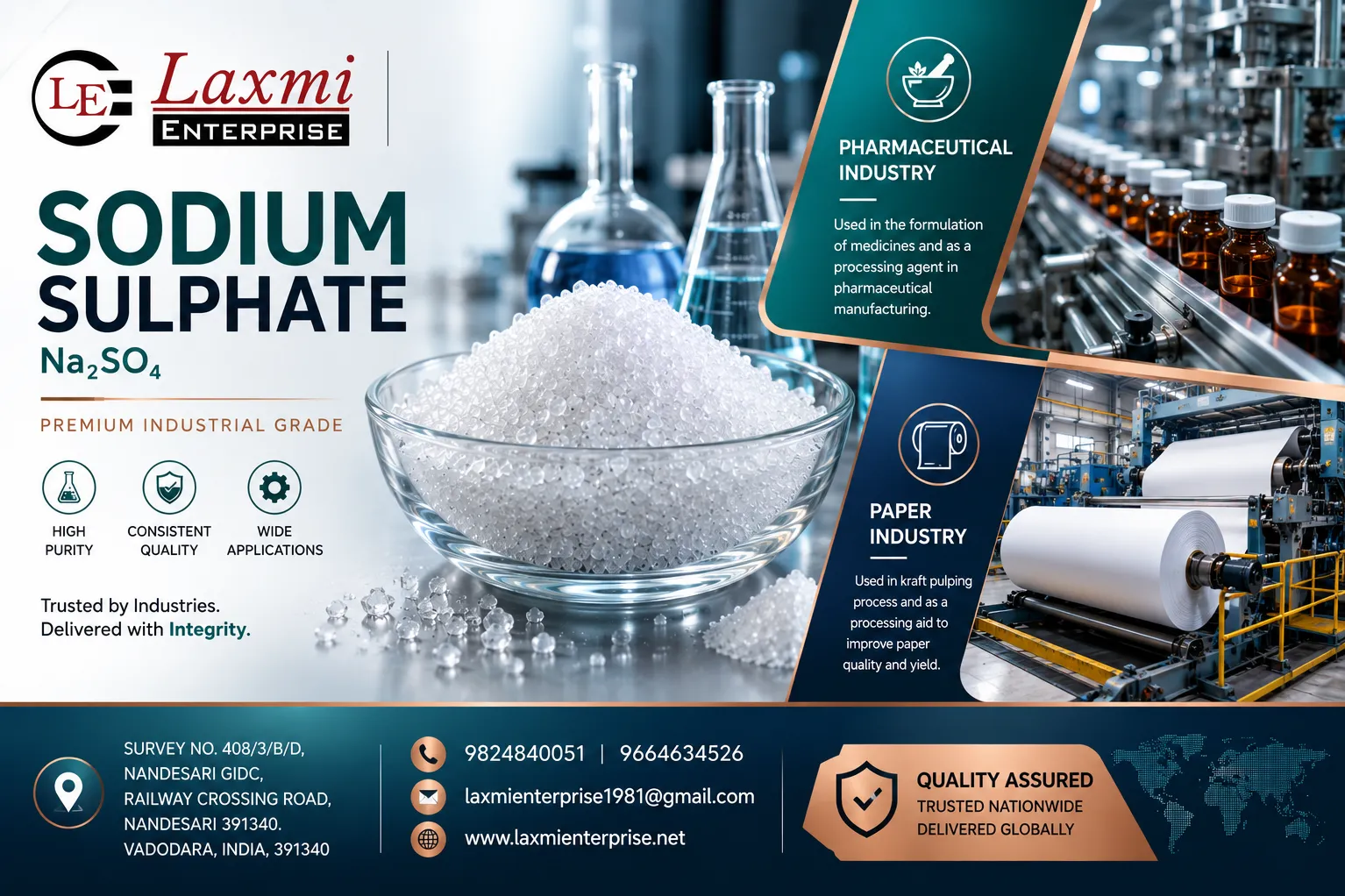
Sodium Sulphate in Textile Processing Chemicals
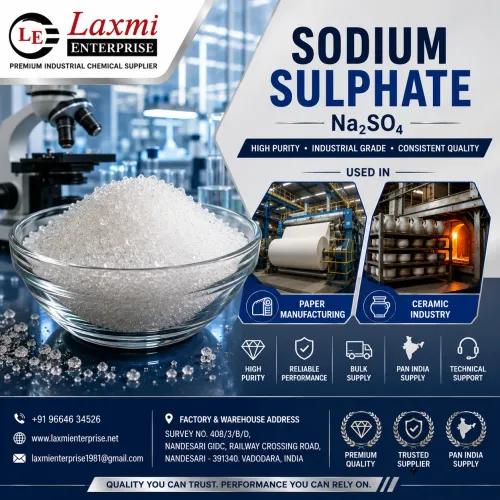
The textile industry depends on precision at every stage, from preparing raw fibers to producing finished fabrics with consistent color, texture, and quality. Every chemical used during textile processing must perform reliably because even small variations can affect production efficiency and product quality. Among the many industrial chemicals used in textile manufacturing, sodium sulphate has established itself as an important raw material for several processing applications.
Manufacturers value sodium sulphate because of its high solubility, chemical stability, and consistent quality. It supports textile chemical formulations and plays a significant role in various wet processing operations where controlled chemical performance is essential.
For textile chemical manufacturers and processing plants, selecting high-quality sodium sulphate helps maintain consistent production standards while supporting efficient manufacturing practices.
Importance of Sodium Sulphate in Textile Processing
Textile manufacturing involves multiple chemical treatments before fabrics reach the final consumer. These processes include preparation, dyeing, washing, finishing, and quality improvement.
Sodium sulphate is widely used because it dissolves easily in water and remains chemically stable throughout processing. Its predictable behavior allows textile manufacturers to maintain better control over production conditions, resulting in improved consistency across different batches.
Reliable chemical quality becomes especially important in large textile mills operating continuous production lines.
Physical Properties That Support Textile Manufacturing
Several characteristics make sodium sulphate suitable for textile processing.
High water solubility
Excellent chemical purity
Stable crystalline structure
Neutral chemical behavior
Low levels of impurities
Consistent particle size
Easy storage and handling
Long shelf life under proper storage conditions
These properties help manufacturers achieve dependable processing performance throughout textile production.
Applications in Textile Dyeing Operations
Uniform dyeing requires carefully controlled processing conditions.
Sodium sulphate is commonly incorporated into various dyeing processes where controlled movement of dye molecules contributes to improved dye distribution across textile fibers.
Consistent chemical quality helps maintain reproducible dyeing conditions, especially in large production batches where process stability is essential.
Reliable raw materials also help reduce production variations between different dye lots.
Benefits for Textile Chemical Manufacturers
Manufacturers producing textile auxiliaries appreciate sodium sulphate for several operational advantages.
Supports consistent formulations
Improves manufacturing efficiency
Maintains batch uniformity
Compatible with various textile chemicals
Easy to blend with other raw materials
Suitable for automated production systems
Supports large-scale manufacturing
Reliable storage performance
These advantages contribute to efficient production and dependable product quality.
Use in Fabric Washing and Finishing
After dyeing, fabrics undergo washing and finishing processes to achieve the desired appearance and performance.
Textile processing chemicals must remain stable throughout these operations.
High-quality sodium sulphate supports formulation consistency, allowing manufacturers to produce processing chemicals with predictable physical characteristics and reliable handling properties.
Consistent formulations help processing plants maintain smooth production schedules.
Importance of Product Purity
Chemical purity directly influences textile manufacturing quality.
Low impurity levels reduce the risk of unwanted reactions during textile processing while supporting consistent manufacturing results.
Industrial users often specify strict quality standards when purchasing sodium sulphate for textile applications because reliable raw materials contribute to stable production performance.
Production Efficiency Benefits
Large textile facilities process significant quantities of fabric every day.
Consistent raw materials simplify manufacturing operations by reducing unnecessary production adjustments.
High-quality sodium sulphate offers several operational benefits.
Supports continuous production
Reduces formulation variability
Improves material flow during manufacturing
Enhances storage stability
Simplifies quality control
Supports efficient packaging operations
Helps maintain production schedules
These benefits contribute to improved operational efficiency throughout textile chemical manufacturing.
Quality Parameters Buyers Should Evaluate
Professional buyers generally assess several quality factors before selecting a sodium sulphate supplier.
Chemical purity
Particle size consistency
Moisture content
Water solubility
Low insoluble matter
Reliable packaging
Batch consistency
Technical documentation
Careful supplier selection helps ensure dependable production throughout the year.
Storage and Handling Guidelines
Proper storage maintains material quality and minimizes production issues.
Store in dry indoor warehouses
Protect from excessive humidity
Keep packaging tightly sealed
Avoid contamination during handling
Use clean storage equipment
Follow first-in-first-out inventory practices
Inspect packaging regularly
Good warehouse management helps preserve product quality over extended storage periods.
Sustainability in Textile Manufacturing
Textile manufacturers continue to improve resource efficiency and reduce production waste.
Consistent raw materials support better process control, reduce rejected batches, and improve manufacturing efficiency.
Reliable sodium sulphate quality also contributes to optimized chemical usage and smoother production operations, supporting sustainable industrial practices.
Choosing a Reliable Sodium Sulphate Supplier
The right supplier provides more than competitive pricing.
Industrial buyers should evaluate production capacity, quality assurance systems, product consistency, logistics capabilities, packaging standards, technical support, and long-term supply reliability.
Working with a dependable supplier helps textile manufacturers maintain uninterrupted production while consistently meeting customer quality expectations.
Conclusion
Sodium sulphate remains an important industrial chemical for textile processing because of its consistent quality, excellent solubility, and dependable manufacturing performance. It supports textile chemical formulations, contributes to production efficiency, and helps manufacturers maintain consistent processing standards across large-scale operations.
As textile manufacturing continues to emphasize quality, productivity, and sustainability, high-purity sodium sulphate will remain a trusted raw material for textile chemical producers worldwide.
Frequently Asked Questions
Why is sodium sulphate used in textile processing?
Sodium sulphate is used because it offers high solubility, chemical stability, and consistent quality, making it suitable for various textile processing applications.
Is high-purity sodium sulphate important for textile manufacturing?
Yes. High-purity sodium sulphate helps maintain consistent production quality and minimizes the risk of impurities affecting textile processing operations.
What properties make sodium sulphate suitable for textile chemicals?
Its excellent water solubility, stable chemical nature, consistent particle size, and reliable storage characteristics make it suitable for textile chemical formulations.
What quality factors should textile manufacturers evaluate before purchasing sodium sulphate?
Manufacturers typically evaluate chemical purity, moisture content, particle size consistency, water solubility, packaging quality, and supplier reliability.
How should sodium sulphate be stored in textile manufacturing facilities?
It should be stored in sealed packaging inside clean, dry warehouses away from moisture and contamination to maintain consistent product quality.
The textile industry depends on precision at every stage, from preparing raw fibers to producing finished fabrics with consistent color, texture, and quality. Every chemical used during textile processing must perform reliably because even small variations can affect production efficiency and product quality. Among the many industrial chemicals used in textile manufacturing, sodium sulphate has established itself as an important raw material for several processing applications.
Manufacturers value sodium sulphate because of its high solubility, chemical stability, and consistent quality. It supports textile chemical formulations and plays a significant role in various wet processing operations where controlled chemical performance is essential.
For textile chemical manufacturers and processing plants, selecting high-quality sodium sulphate helps maintain consistent production standards while supporting efficient manufacturing practices.
Importance of Sodium Sulphate in Textile Processing
Textile manufacturing involves multiple chemical treatments before fabrics reach the final consumer. These processes include preparation, dyeing, washing, finishing, and quality improvement.
Sodium sulphate is widely used because it dissolves easily in water and remains chemically stable throughout processing. Its predictable behavior allows textile manufacturers to maintain better control over production conditions, resulting in improved consistency across different batches.
Reliable chemical quality becomes especially important in large textile mills operating continuous production lines.
Physical Properties That Support Textile Manufacturing
Several characteristics make sodium sulphate suitable for textile processing.
High water solubility
Excellent chemical purity
Stable crystalline structure
Neutral chemical behavior
Low levels of impurities
Consistent particle size
Easy storage and handling
Long shelf life under proper storage conditions
These properties help manufacturers achieve dependable processing performance throughout textile production.
Applications in Textile Dyeing Operations
Uniform dyeing requires carefully controlled processing conditions.
Sodium sulphate is commonly incorporated into various dyeing processes where controlled movement of dye molecules contributes to improved dye distribution across textile fibers.
Consistent chemical quality helps maintain reproducible dyeing conditions, especially in large production batches where process stability is essential.
Reliable raw materials also help reduce production variations between different dye lots.
Benefits for Textile Chemical Manufacturers
Manufacturers producing textile auxiliaries appreciate sodium sulphate for several operational advantages.
Supports consistent formulations
Improves manufacturing efficiency
Maintains batch uniformity
Compatible with various textile chemicals
Easy to blend with other raw materials
Suitable for automated production systems
Supports large-scale manufacturing
Reliable storage performance
These advantages contribute to efficient production and dependable product quality.
Use in Fabric Washing and Finishing
After dyeing, fabrics undergo washing and finishing processes to achieve the desired appearance and performance.
Textile processing chemicals must remain stable throughout these operations.
High-quality sodium sulphate supports formulation consistency, allowing manufacturers to produce processing chemicals with predictable physical characteristics and reliable handling properties.
Consistent formulations help processing plants maintain smooth production schedules.
Importance of Product Purity
Chemical purity directly influences textile manufacturing quality.
Low impurity levels reduce the risk of unwanted reactions during textile processing while supporting consistent manufacturing results.
Industrial users often specify strict quality standards when purchasing sodium sulphate for textile applications because reliable raw materials contribute to stable production performance.
Production Efficiency Benefits
Large textile facilities process significant quantities of fabric every day.
Consistent raw materials simplify manufacturing operations by reducing unnecessary production adjustments.
High-quality sodium sulphate offers several operational benefits.
Supports continuous production
Reduces formulation variability
Improves material flow during manufacturing
Enhances storage stability
Simplifies quality control
Supports efficient packaging operations
Helps maintain production schedules
These benefits contribute to improved operational efficiency throughout textile chemical manufacturing.
Quality Parameters Buyers Should Evaluate
Professional buyers generally assess several quality factors before selecting a sodium sulphate supplier.
Chemical purity
Particle size consistency
Moisture content
Water solubility
Low insoluble matter
Reliable packaging
Batch consistency
Technical documentation
Careful supplier selection helps ensure dependable production throughout the year.
Storage and Handling Guidelines
Proper storage maintains material quality and minimizes production issues.
Store in dry indoor warehouses
Protect from excessive humidity
Keep packaging tightly sealed
Avoid contamination during handling
Use clean storage equipment
Follow first-in-first-out inventory practices
Inspect packaging regularly
Good warehouse management helps preserve product quality over extended storage periods.
Sustainability in Textile Manufacturing
Textile manufacturers continue to improve resource efficiency and reduce production waste.
Consistent raw materials support better process control, reduce rejected batches, and improve manufacturing efficiency.
Reliable sodium sulphate quality also contributes to optimized chemical usage and smoother production operations, supporting sustainable industrial practices.
Choosing a Reliable Sodium Sulphate Supplier
The right supplier provides more than competitive pricing.
Industrial buyers should evaluate production capacity, quality assurance systems, product consistency, logistics capabilities, packaging standards, technical support, and long-term supply reliability.
Working with a dependable supplier helps textile manufacturers maintain uninterrupted production while consistently meeting customer quality expectations.
Conclusion
Sodium sulphate remains an important industrial chemical for textile processing because of its consistent quality, excellent solubility, and dependable manufacturing performance. It supports textile chemical formulations, contributes to production efficiency, and helps manufacturers maintain consistent processing standards across large-scale operations.
As textile manufacturing continues to emphasize quality, productivity, and sustainability, high-purity sodium sulphate will remain a trusted raw material for textile chemical producers worldwide.
Frequently Asked Questions
Why is sodium sulphate used in textile processing?
Sodium sulphate is used because it offers high solubility, chemical stability, and consistent quality, making it suitable for various textile processing applications.
Is high-purity sodium sulphate important for textile manufacturing?
Yes. High-purity sodium sulphate helps maintain consistent production quality and minimizes the risk of impurities affecting textile processing operations.
What properties make sodium sulphate suitable for textile chemicals?
Its excellent water solubility, stable chemical nature, consistent particle size, and reliable storage characteristics make it suitable for textile chemical formulations.
What quality factors should textile manufacturers evaluate before purchasing sodium sulphate?
Manufacturers typically evaluate chemical purity, moisture content, particle size consistency, water solubility, packaging quality, and supplier reliability.
How should sodium sulphate be stored in textile manufacturing facilities?
It should be stored in sealed packaging inside clean, dry warehouses away from moisture and contamination to maintain consistent product quality.
Keywords