Sodium Sulphate in Thermal Energy Storage Systems: Industrial Applications, Material Properties, Performance Benefits, and Buying Guide
The global transition toward renewable energy has accelerated the demand for advanced energy storage technologies. Solar power plants, industrial heating systems, district heating networks, and waste heat recovery facilities increasingly require reliable methods to store thermal energy for later use. Among the various technologies available, Thermal Energy Storage (TES) has emerged as one of the most efficient solutions for improving energy utilization and reducing dependence on fossil fuels.
Thermal Energy Storage systems capture excess heat when it is available and release it when energy demand increases. This approach improves process efficiency, stabilizes energy supply, and enhances the overall economics of renewable energy projects. One of the most important classes of TES technology is Phase Change Material (PCM) storage, where specialized materials absorb and release large amounts of heat during phase transitions.
Sodium sulphate has attracted significant attention in this field because its decahydrate form (Glauber's Salt, Na₂SO₄·10H₂O) has been extensively researched as a phase change material for low-temperature thermal energy storage. Due to its high latent heat of fusion, suitable phase transition temperature, wide availability, and relatively low cost, it has become one of the most studied inorganic PCMs for building energy systems and solar thermal applications.
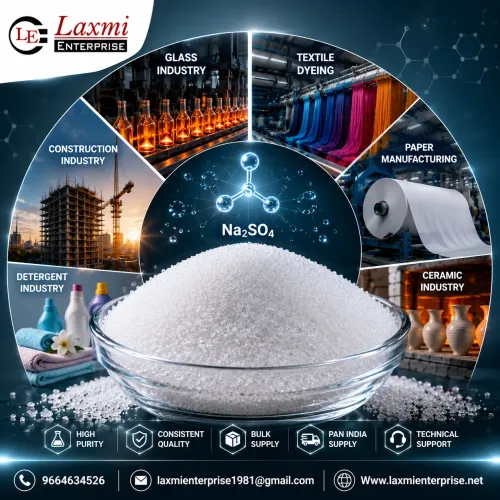
It is important to note that anhydrous sodium sulphate and sodium sulphate decahydrate serve different industrial purposes. While anhydrous sodium sulphate is widely used in glass manufacturing, detergents, textiles, and chemical processing, Glauber's Salt is the form commonly investigated and applied in thermal energy storage systems.
As industries continue investing in renewable energy, sustainable buildings, and industrial waste heat recovery, understanding the properties, benefits, and engineering considerations of sodium sulphate-based thermal storage materials has become increasingly valuable for engineers, researchers, and industrial buyers.
What Is Thermal Energy Storage?
Thermal Energy Storage is a technology that stores heat or cold for later use. Instead of wasting surplus thermal energy, storage systems retain it until it is needed, improving overall energy efficiency.
TES technologies generally fall into three categories:
Sensible Heat Storage
Latent Heat Storage
Thermochemical Energy Storage
Among these, latent heat storage using phase change materials offers high energy density and nearly constant operating temperatures during charging and discharging cycles.
Understanding Phase Change Materials (PCM)
Phase Change Materials absorb thermal energy while changing physical state, typically from solid to liquid, and release that stored energy when returning to the solid state.
Unlike sensible heat storage materials, which increase in temperature continuously, PCMs store significant amounts of energy at nearly constant temperatures.
This characteristic makes PCMs attractive for:
Solar heating systems
Building temperature regulation
HVAC systems
Cold chain logistics
Industrial waste heat recovery
District heating
Renewable energy storage
Among inorganic PCMs, sodium sulphate decahydrate has long been recognized as one of the most widely researched materials.
Understanding Sodium Sulphate Decahydrate
Sodium sulphate exists in multiple forms depending on its water content.
The hydrated form used in thermal storage is:
Sodium Sulphate Decahydrate (Na₂SO₄·10H₂O)
Commonly known as:
Glauber's Salt
Sodium Sulphate Decahydrate
This hydrated compound undergoes a phase transition within a temperature range suitable for several low-temperature heating applications, making it useful for latent heat storage research and certain commercial systems.
Technical Profile
Property Typical Information
Chemical Formula Na₂SO₄·10H₂O
Common Name Glauber's Salt
Molecular Weight 322.20 g/mol
Appearance White crystalline solid
Water Solubility High
Odor Odorless
Chemical Nature Inorganic hydrated salt
Phase Change Material Yes
Stability Stable under recommended storage conditions
Actual values depend on product grade and intended application.
Why Sodium Sulphate Is Used in Thermal Energy Storage
The popularity of sodium sulphate decahydrate as a PCM is based on several technical characteristics.
High Latent Heat Storage Capacity
One of its primary advantages is its ability to store significant thermal energy during phase transition, allowing relatively compact storage systems.
Suitable Phase Change Temperature
Its phase transition temperature is appropriate for several low-temperature thermal management applications, including solar heating and building energy systems.
Wide Availability
Sodium sulphate is commercially available in many regions, making procurement easier than for some specialty phase change materials.
Cost Effectiveness
Compared with several advanced engineered PCMs, sodium sulphate decahydrate can offer an economical option for selected applications.
Non-Flammable Nature
As an inorganic salt hydrate, it does not present the flammability concerns associated with many organic phase change materials.
Applications of Sodium Sulphate-Based Thermal Storage
Sodium sulphate decahydrate has been studied or applied in:
Solar thermal energy storage
Building temperature regulation
Passive solar heating
District heating systems
Industrial waste heat recovery
HVAC thermal storage
Green building technologies
Renewable energy systems
Thermal battery research
Academic and industrial R& D projects
The suitability of sodium sulphate-based PCMs depends on system design and engineering requirements.
Advantages for Industrial Energy Systems
When appropriately engineered, sodium sulphate-based thermal storage materials can provide several potential benefits:
Improved energy utilization
Reduced peak heating demand
Better use of renewable energy
Enhanced thermal stability
Lower dependence on conventional fuels
Support for sustainable building design
Potential operational cost savings through improved energy management
The overall performance depends on factors such as system design, encapsulation methods, cycling stability, and thermal management.
The global transition toward renewable energy has accelerated the demand for advanced energy storage technologies. Solar power plants, industrial heating systems, district heating networks, and waste heat recovery facilities increasingly require reliable methods to store thermal energy for later use. Among the various technologies available, Thermal Energy Storage (TES) has emerged as one of the most efficient solutions for improving energy utilization and reducing dependence on fossil fuels.
Thermal Energy Storage systems capture excess heat when it is available and release it when energy demand increases. This approach improves process efficiency, stabilizes energy supply, and enhances the overall economics of renewable energy projects. One of the most important classes of TES technology is Phase Change Material (PCM) storage, where specialized materials absorb and release large amounts of heat during phase transitions.
Sodium sulphate has attracted significant attention in this field because its decahydrate form (Glauber's Salt, Na₂SO₄·10H₂O) has been extensively researched as a phase change material for low-temperature thermal energy storage. Due to its high latent heat of fusion, suitable phase transition temperature, wide availability, and relatively low cost, it has become one of the most studied inorganic PCMs for building energy systems and solar thermal applications.
It is important to note that anhydrous sodium sulphate and sodium sulphate decahydrate serve different industrial purposes. While anhydrous sodium sulphate is widely used in glass manufacturing, detergents, textiles, and chemical processing, Glauber's Salt is the form commonly investigated and applied in thermal energy storage systems.
As industries continue investing in renewable energy, sustainable buildings, and industrial waste heat recovery, understanding the properties, benefits, and engineering considerations of sodium sulphate-based thermal storage materials has become increasingly valuable for engineers, researchers, and industrial buyers.
What Is Thermal Energy Storage?
Thermal Energy Storage is a technology that stores heat or cold for later use. Instead of wasting surplus thermal energy, storage systems retain it until it is needed, improving overall energy efficiency.
TES technologies generally fall into three categories:
Sensible Heat Storage
Latent Heat Storage
Thermochemical Energy Storage
Among these, latent heat storage using phase change materials offers high energy density and nearly constant operating temperatures during charging and discharging cycles.
Understanding Phase Change Materials (PCM)
Phase Change Materials absorb thermal energy while changing physical state, typically from solid to liquid, and release that stored energy when returning to the solid state.
Unlike sensible heat storage materials, which increase in temperature continuously, PCMs store significant amounts of energy at nearly constant temperatures.
This characteristic makes PCMs attractive for:
Solar heating systems
Building temperature regulation
HVAC systems
Cold chain logistics
Industrial waste heat recovery
District heating
Renewable energy storage
Among inorganic PCMs, sodium sulphate decahydrate has long been recognized as one of the most widely researched materials.
Understanding Sodium Sulphate Decahydrate
Sodium sulphate exists in multiple forms depending on its water content.
The hydrated form used in thermal storage is:
Sodium Sulphate Decahydrate (Na₂SO₄·10H₂O)
Commonly known as:
Glauber's Salt
Sodium Sulphate Decahydrate
This hydrated compound undergoes a phase transition within a temperature range suitable for several low-temperature heating applications, making it useful for latent heat storage research and certain commercial systems.
Technical Profile
Property Typical Information
Chemical Formula Na₂SO₄·10H₂O
Common Name Glauber's Salt
Molecular Weight 322.20 g/mol
Appearance White crystalline solid
Water Solubility High
Odor Odorless
Chemical Nature Inorganic hydrated salt
Phase Change Material Yes
Stability Stable under recommended storage conditions
Actual values depend on product grade and intended application.
Why Sodium Sulphate Is Used in Thermal Energy Storage
The popularity of sodium sulphate decahydrate as a PCM is based on several technical characteristics.
High Latent Heat Storage Capacity
One of its primary advantages is its ability to store significant thermal energy during phase transition, allowing relatively compact storage systems.
Suitable Phase Change Temperature
Its phase transition temperature is appropriate for several low-temperature thermal management applications, including solar heating and building energy systems.
Wide Availability
Sodium sulphate is commercially available in many regions, making procurement easier than for some specialty phase change materials.
Cost Effectiveness
Compared with several advanced engineered PCMs, sodium sulphate decahydrate can offer an economical option for selected applications.
Non-Flammable Nature
As an inorganic salt hydrate, it does not present the flammability concerns associated with many organic phase change materials.
Applications of Sodium Sulphate-Based Thermal Storage
Sodium sulphate decahydrate has been studied or applied in:
Solar thermal energy storage
Building temperature regulation
Passive solar heating
District heating systems
Industrial waste heat recovery
HVAC thermal storage
Green building technologies
Renewable energy systems
Thermal battery research
Academic and industrial R& D projects
The suitability of sodium sulphate-based PCMs depends on system design and engineering requirements.
Advantages for Industrial Energy Systems
When appropriately engineered, sodium sulphate-based thermal storage materials can provide several potential benefits:
Improved energy utilization
Reduced peak heating demand
Better use of renewable energy
Enhanced thermal stability
Lower dependence on conventional fuels
Support for sustainable building design
Potential operational cost savings through improved energy management
The overall performance depends on factors such as system design, encapsulation methods, cycling stability, and thermal management.
Keywords