Why Your Detergent Powder Starts Caking During Storage: Causes, Prevention and the Role of Sodium Sulphate
One of the most frustrating situations for a detergent manufacturer is receiving a complaint about a product that looked perfectly fine when it left the factory.
The powder was free flowing during production.
The packaging line operated without interruption.
Quality checks were satisfactory.
But a few weeks later, distributors began reporting hard lumps inside the bags. Retailers found that the powder no longer poured easily, and consumers questioned the quality of the product.
Whenever this happens, the first reaction is usually to blame storage conditions.
Humidity certainly plays a role, but it is rarely the only reason.
In our experience of working with manufacturers across India, caking is usually the result of several small factors coming together rather than one major mistake.
Understanding those factors can help manufacturers reduce product complaints and improve long-term product stability.
Caking Does Not Begin in the Warehouse
Many people assume that detergent powder begins to cake only after it reaches the warehouse.
In reality, the process often starts much earlier.
The quality of raw materials.
The moisture present during manufacturing.
The blending process.
Ambient weather conditions.
Packaging quality.
Storage practices.
Each of these influences how the finished product behaves over time.
By the time the first complaint reaches the factory, the actual cause may have started weeks earlier.
That is why solving caking problems requires looking at the complete manufacturing process instead of focusing on only one stage.
Why Sodium Sulphate Matters
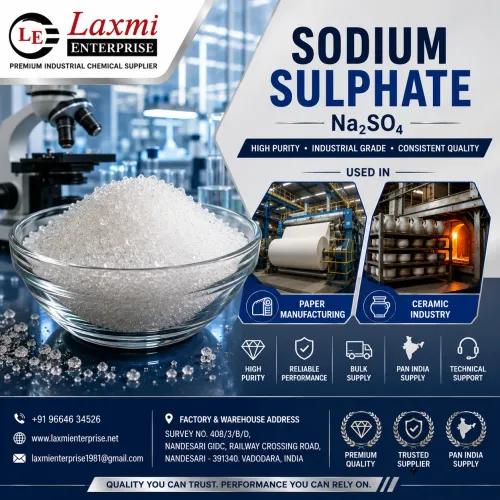
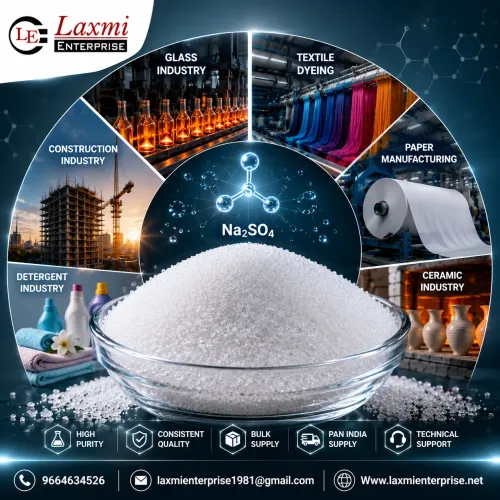
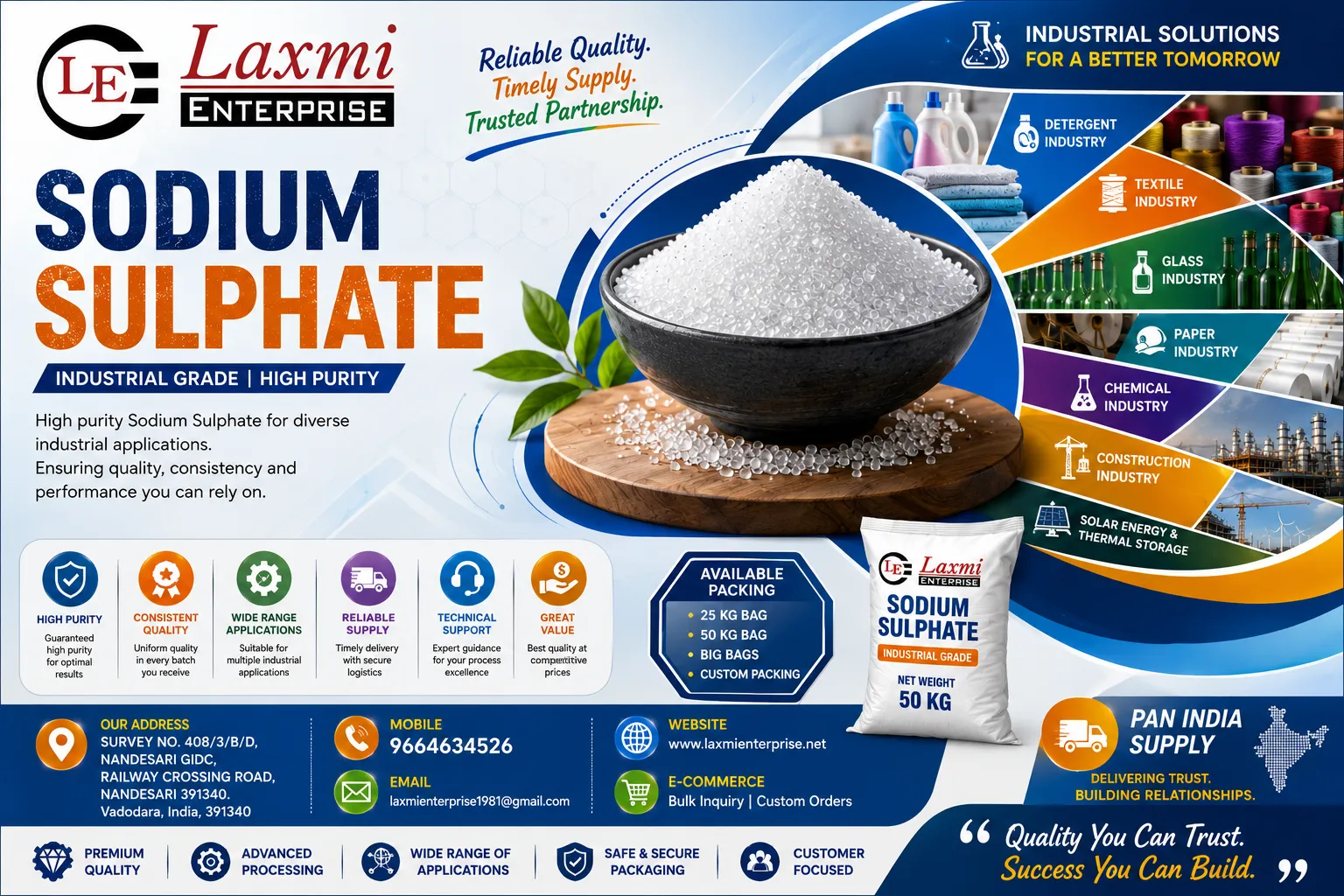
Sodium Sulphate is commonly used in detergent powder because it contributes to the physical characteristics of the finished product.
When its quality remains consistent, it helps manufacturers achieve better blending, smoother material flow and improved production stability.
However, like every industrial raw material, consistency matters.
Manufacturers generally look for material that maintains stable quality from one shipment to the next.
Consistent raw materials make it easier to maintain consistent production.
When incoming materials vary unexpectedly, production teams often need additional adjustments that may influence the finished product.
The Role of Moisture
Humidity is one of the biggest challenges faced by detergent manufacturers, especially during the monsoon season.
Even well-designed formulations can absorb moisture if production areas or storage facilities are not properly controlled.
Moisture gradually encourages particles to bind together.
Initially these small clusters are barely noticeable.
Over time they develop into larger lumps that reduce the free-flowing nature of the detergent powder.
Although some environmental conditions cannot be controlled completely, good manufacturing practices can significantly reduce this risk.
Storage Conditions Matter More Than Many People Think
Finished detergent should never be treated as a product that can simply be placed anywhere inside a warehouse.
Proper storage contributes directly to product quality.
Warehouses should remain dry and well ventilated.
Bags should be stacked carefully on pallets instead of directly on the floor.
Walls exposed to rain or excessive humidity should be avoided.
Stock should be rotated using the first-in, first-out principle.
Simple warehouse practices often prevent avoidable quality issues.
Packaging Plays a Bigger Role Than Expected
Packaging protects much more than the appearance of the product.
It protects the formulation itself.
Poor quality bags or improperly sealed packaging allow moisture from the surrounding environment to enter gradually.
Even small amounts of moisture can influence the behaviour of detergent powder during storage.
Manufacturers who invest in better packaging often notice improvements in product stability, especially when products travel long distances before reaching distributors.
Production Discipline Makes a Difference
Every successful detergent manufacturer develops disciplined production procedures.
Raw materials are inspected before use.
Mixing sequences remain consistent.
Equipment is cleaned regularly.
Moisture levels are monitored wherever possible.
Finished products are packed without unnecessary delays.
These practices may appear routine, yet together they contribute significantly to consistent product quality.
Good manufacturing is often the result of many small disciplines rather than one major innovation.
Should Manufacturers Change Suppliers Immediately?
Whenever quality issues appear, there is sometimes pressure to replace the raw material supplier immediately.
While this may occasionally be necessary, experienced manufacturers usually investigate the complete production process before making such a decision.
A review normally includes incoming raw materials, process conditions, environmental factors, packaging and storage practices.
Only after understanding the complete picture can the actual cause be identified.
Changing suppliers without proper investigation may solve nothing if the real problem lies elsewhere.
The Importance of Consistent Raw Materials
Every manufacturing process benefits from consistency.
When production teams know exactly how raw materials will behave, they can establish stable operating conditions.
Quality departments develop confidence in routine inspections.
Production planning becomes more predictable.
This consistency allows manufacturers to spend less time solving unexpected problems and more time improving products and expanding their business.
That is why experienced manufacturers value dependable suppliers who maintain stable quality over long periods.
Practical Tips for Reducing Caking
Maintain good warehouse ventilation throughout the year.
Avoid storing finished goods directly on concrete floors.
Use proper pallet systems.
Inspect packaging before dispatch.
Rotate inventory regularly.
Monitor production conditions during periods of high humidity.
Purchase raw materials from suppliers known for consistent quality.
None of these steps alone guarantees perfect results.
Together they significantly reduce the likelihood of storage-related problems.
How Laxmi Enterprise Supports Detergent Manufacturers
At Laxmi Enterprise, we understand that detergent manufacturers depend on much more than competitive pricing.
They need consistency.
They need reliable deliveries.
They need confidence that the material entering today's production will perform the same way as the material supplied last month.
From our facility in Nandesari GIDC, Vadodara, we supply Sodium Sulphate and other industrial chemicals to manufacturers across India.
Our customers operate in industries where production efficiency and product consistency directly influence their reputation in the market.
That is why we focus on maintaining dependable quality, professional service and long-term business relationships.
Every shipment we deliver represents our commitment to supporting our customers' manufacturing success.
Final Thoughts
Product quality is rarely determined by a single ingredient or one isolated process.
It is created through careful attention to every stage of manufacturing.
From selecting dependable raw materials to maintaining proper storage conditions, every decision contributes to the final result.
Manufacturers who consistently produce high-quality detergent powders understand that preventing problems is always easier than solving them after products reach the market.
Reliable suppliers, disciplined production practices and good warehouse management work together to protect both product quality and customer confidence.
Frequently Asked Questions
Why does detergent powder develop lumps during storage?
Caking usually results from a combination of moisture, storage conditions, packaging quality, production practices and raw material consistency rather than a single cause.
Does Sodium Sulphate influence the free-flowing nature of detergent powder?
Sodium Sulphate contributes to the physical characteristics of detergent powder, and consistent raw material quality helps manufacturers maintain stable production and product consistency.
Can poor warehouse conditions affect detergent quality?
Yes. High humidity, improper stacking, poor ventilation and direct floor storage can all increase the risk of caking during storage.
Should manufacturers immediately change suppliers if caking occurs?
Not necessarily. The complete manufacturing process, including raw materials, production conditions, packaging and storage, should be evaluated before reaching a conclusion.
Why do detergent manufacturers choose Laxmi Enterprise?
Manufacturers across India rely on Laxmi Enterprise for consistent-quality Sodium Sulphate, dependable deliveries and professional customer support. Operating from Nandesari GIDC, Vadodara, we are committed to helping customers maintain stable production and reliable product quality.
About Laxmi Enterprise
Laxmi Enterprise is a trusted manufacturer, supplier and distributor of industrial chemicals located in Nandesari GIDC, Vadodara, Gujarat. We supply Sodium Sulphate, Sodium Nitrate, Sodium Acetate, Tri Sodium Phosphate and other industrial chemicals to manufacturers across detergent, textile, glass, paper, chemical processing, ceramic and allied industries.
We believe that long-term customer relationships are built through consistency, reliability and a genuine understanding of the manufacturing challenges our customers face every day.
One of the most frustrating situations for a detergent manufacturer is receiving a complaint about a product that looked perfectly fine when it left the factory.
The powder was free flowing during production.
The packaging line operated without interruption.
Quality checks were satisfactory.
But a few weeks later, distributors began reporting hard lumps inside the bags. Retailers found that the powder no longer poured easily, and consumers questioned the quality of the product.
Whenever this happens, the first reaction is usually to blame storage conditions.
Humidity certainly plays a role, but it is rarely the only reason.
In our experience of working with manufacturers across India, caking is usually the result of several small factors coming together rather than one major mistake.
Understanding those factors can help manufacturers reduce product complaints and improve long-term product stability.
Caking Does Not Begin in the Warehouse
Many people assume that detergent powder begins to cake only after it reaches the warehouse.
In reality, the process often starts much earlier.
The quality of raw materials.
The moisture present during manufacturing.
The blending process.
Ambient weather conditions.
Packaging quality.
Storage practices.
Each of these influences how the finished product behaves over time.
By the time the first complaint reaches the factory, the actual cause may have started weeks earlier.
That is why solving caking problems requires looking at the complete manufacturing process instead of focusing on only one stage.
Why Sodium Sulphate Matters
Sodium Sulphate is commonly used in detergent powder because it contributes to the physical characteristics of the finished product.
When its quality remains consistent, it helps manufacturers achieve better blending, smoother material flow and improved production stability.
However, like every industrial raw material, consistency matters.
Manufacturers generally look for material that maintains stable quality from one shipment to the next.
Consistent raw materials make it easier to maintain consistent production.
When incoming materials vary unexpectedly, production teams often need additional adjustments that may influence the finished product.
The Role of Moisture
Humidity is one of the biggest challenges faced by detergent manufacturers, especially during the monsoon season.
Even well-designed formulations can absorb moisture if production areas or storage facilities are not properly controlled.
Moisture gradually encourages particles to bind together.
Initially these small clusters are barely noticeable.
Over time they develop into larger lumps that reduce the free-flowing nature of the detergent powder.
Although some environmental conditions cannot be controlled completely, good manufacturing practices can significantly reduce this risk.
Storage Conditions Matter More Than Many People Think
Finished detergent should never be treated as a product that can simply be placed anywhere inside a warehouse.
Proper storage contributes directly to product quality.
Warehouses should remain dry and well ventilated.
Bags should be stacked carefully on pallets instead of directly on the floor.
Walls exposed to rain or excessive humidity should be avoided.
Stock should be rotated using the first-in, first-out principle.
Simple warehouse practices often prevent avoidable quality issues.
Packaging Plays a Bigger Role Than Expected
Packaging protects much more than the appearance of the product.
It protects the formulation itself.
Poor quality bags or improperly sealed packaging allow moisture from the surrounding environment to enter gradually.
Even small amounts of moisture can influence the behaviour of detergent powder during storage.
Manufacturers who invest in better packaging often notice improvements in product stability, especially when products travel long distances before reaching distributors.
Production Discipline Makes a Difference
Every successful detergent manufacturer develops disciplined production procedures.
Raw materials are inspected before use.
Mixing sequences remain consistent.
Equipment is cleaned regularly.
Moisture levels are monitored wherever possible.
Finished products are packed without unnecessary delays.
These practices may appear routine, yet together they contribute significantly to consistent product quality.
Good manufacturing is often the result of many small disciplines rather than one major innovation.
Should Manufacturers Change Suppliers Immediately?
Whenever quality issues appear, there is sometimes pressure to replace the raw material supplier immediately.
While this may occasionally be necessary, experienced manufacturers usually investigate the complete production process before making such a decision.
A review normally includes incoming raw materials, process conditions, environmental factors, packaging and storage practices.
Only after understanding the complete picture can the actual cause be identified.
Changing suppliers without proper investigation may solve nothing if the real problem lies elsewhere.
The Importance of Consistent Raw Materials
Every manufacturing process benefits from consistency.
When production teams know exactly how raw materials will behave, they can establish stable operating conditions.
Quality departments develop confidence in routine inspections.
Production planning becomes more predictable.
This consistency allows manufacturers to spend less time solving unexpected problems and more time improving products and expanding their business.
That is why experienced manufacturers value dependable suppliers who maintain stable quality over long periods.
Practical Tips for Reducing Caking
Maintain good warehouse ventilation throughout the year.
Avoid storing finished goods directly on concrete floors.
Use proper pallet systems.
Inspect packaging before dispatch.
Rotate inventory regularly.
Monitor production conditions during periods of high humidity.
Purchase raw materials from suppliers known for consistent quality.
None of these steps alone guarantees perfect results.
Together they significantly reduce the likelihood of storage-related problems.
How Laxmi Enterprise Supports Detergent Manufacturers
At Laxmi Enterprise, we understand that detergent manufacturers depend on much more than competitive pricing.
They need consistency.
They need reliable deliveries.
They need confidence that the material entering today's production will perform the same way as the material supplied last month.
From our facility in Nandesari GIDC, Vadodara, we supply Sodium Sulphate and other industrial chemicals to manufacturers across India.
Our customers operate in industries where production efficiency and product consistency directly influence their reputation in the market.
That is why we focus on maintaining dependable quality, professional service and long-term business relationships.
Every shipment we deliver represents our commitment to supporting our customers' manufacturing success.
Final Thoughts
Product quality is rarely determined by a single ingredient or one isolated process.
It is created through careful attention to every stage of manufacturing.
From selecting dependable raw materials to maintaining proper storage conditions, every decision contributes to the final result.
Manufacturers who consistently produce high-quality detergent powders understand that preventing problems is always easier than solving them after products reach the market.
Reliable suppliers, disciplined production practices and good warehouse management work together to protect both product quality and customer confidence.
Frequently Asked Questions
Why does detergent powder develop lumps during storage?
Caking usually results from a combination of moisture, storage conditions, packaging quality, production practices and raw material consistency rather than a single cause.
Does Sodium Sulphate influence the free-flowing nature of detergent powder?
Sodium Sulphate contributes to the physical characteristics of detergent powder, and consistent raw material quality helps manufacturers maintain stable production and product consistency.
Can poor warehouse conditions affect detergent quality?
Yes. High humidity, improper stacking, poor ventilation and direct floor storage can all increase the risk of caking during storage.
Should manufacturers immediately change suppliers if caking occurs?
Not necessarily. The complete manufacturing process, including raw materials, production conditions, packaging and storage, should be evaluated before reaching a conclusion.
Why do detergent manufacturers choose Laxmi Enterprise?
Manufacturers across India rely on Laxmi Enterprise for consistent-quality Sodium Sulphate, dependable deliveries and professional customer support. Operating from Nandesari GIDC, Vadodara, we are committed to helping customers maintain stable production and reliable product quality.
About Laxmi Enterprise
Laxmi Enterprise is a trusted manufacturer, supplier and distributor of industrial chemicals located in Nandesari GIDC, Vadodara, Gujarat. We supply Sodium Sulphate, Sodium Nitrate, Sodium Acetate, Tri Sodium Phosphate and other industrial chemicals to manufacturers across detergent, textile, glass, paper, chemical processing, ceramic and allied industries.
We believe that long-term customer relationships are built through consistency, reliability and a genuine understanding of the manufacturing challenges our customers face every day.
Keywords