
Why Manufacturing Companies Standardize Sodium Nitrate Suppliers Instead of Changing Vendors Frequently
Walk into any well managed manufacturing plant and you will notice something interesting.
Most of the important raw materials come from suppliers that have been associated with the company for many years. This is rarely a coincidence. It is usually the result of careful evaluation, consistent performance and mutual trust developed over time.
Changing a supplier may appear to be a simple commercial decision, but inside a manufacturing plant the impact is much greater. Every raw material is linked to production planning, quality control, inventory management and customer commitments. Even a small change in the supply chain can require additional verification before production teams become comfortable with the new material.
That is why many successful manufacturers prefer supplier standardization instead of changing vendors every time they receive a lower quotation.
Stability Creates Better Manufacturing
Manufacturing is built around consistency.
Production engineers establish process parameters after repeated trials.
Quality departments define inspection procedures.
Warehouse teams organize inventory according to regular consumption.
Procurement departments prepare annual purchasing plans.
When suppliers remain consistent, every department can work more efficiently because fewer variables need to be managed.
Stable supplier relationships often translate into stable manufacturing.
Every New Supplier Requires Time
Approving a new supplier is not as simple as issuing a purchase order.
Most manufacturing companies spend time reviewing the supplier before commercial approval.
Technical requirements are discussed.
Commercial terms are negotiated.
Documentation is verified.
Packaging is evaluated.
Trial supplies may be reviewed.
Internal approvals are completed.
This entire process requires time and resources.
For this reason, manufacturers generally avoid unnecessary supplier changes unless there is a genuine business reason.
Experience Reduces Uncertainty
A supplier who has supplied the same customer for several years understands the customer's expectations.
Monthly consumption becomes predictable.
Preferred packaging is already known.
Delivery schedules become familiar.
Communication becomes faster.
Small issues are resolved more efficiently because both companies understand how each other works.
Experience removes unnecessary uncertainty from the purchasing process.
Better Forecasting Improves Supply
Reliable supplier relationships also improve forecasting.
Customers can share expected production volumes.
Suppliers can plan inventory accordingly.
Transportation schedules become easier to organize.
Seasonal demand can often be anticipated.
Planning together helps both companies operate more efficiently.
Production Teams Value Familiar Materials
Operators work more confidently when they know how a raw material behaves.
Production engineers spend less time adjusting processes.
Quality departments become familiar with inspection results.
Warehouse staff understand storage requirements.
Although the product remains the same, familiarity improves operational efficiency throughout the manufacturing process.
Strong Relationships Encourage Better Service
Long term customers often receive quicker responses because suppliers already understand their business.
Commercial discussions become more productive.
Urgent requirements are easier to manage.
Planning meetings become more meaningful.
Both companies begin focusing on long term improvement instead of individual transactions.
This creates value that cannot easily be measured in a quotation.
Price Still Matters
Choosing a reliable supplier does not mean ignoring commercial competitiveness.
Responsible procurement departments continue reviewing market conditions.
They negotiate fairly.
They compare commercial offers.
However, they also recognize that the lowest quotation is only one part of the overall purchasing decision.
Reliable supply, consistent quality and dependable service often provide much greater value over time.
When Should a Company Consider a New Supplier
There are situations where reviewing alternative suppliers becomes necessary.
Production capacity increases.
Product specifications change.
Additional backup suppliers are required.
Delivery performance becomes inconsistent.
Commercial requirements change significantly.
In these situations, evaluating new suppliers becomes part of good procurement practice.
The objective is not simply to change suppliers but to strengthen the supply chain.
Building Long Term Manufacturing Success
The strongest manufacturing companies rarely succeed because of one good purchase.
They succeed because thousands of purchasing decisions made over many years support stable production.
Reliable suppliers become an important part of that success.
Trust develops gradually.
Confidence increases with every successful delivery.
Long term cooperation creates benefits for both supplier and customer.
Final Thoughts
Supplier standardization is not about avoiding change.
It is about reducing unnecessary risk.
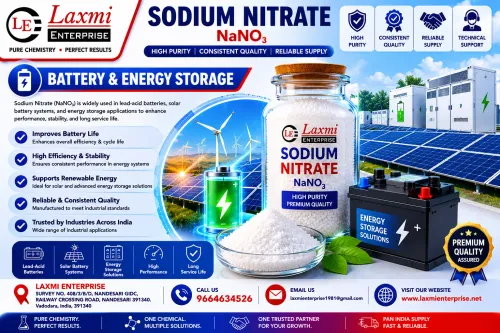
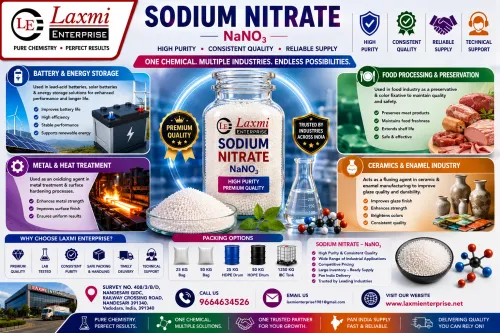
Manufacturers that work with dependable Sodium Nitrate suppliers often experience better planning, smoother production and stronger operational stability.
In a competitive manufacturing environment, consistency is often more valuable than constant change.
Frequently Asked Questions
Why do manufacturers standardize Sodium Nitrate suppliers?
Standardization helps maintain consistent product quality, reliable deliveries and predictable manufacturing performance.
Does changing suppliers frequently create challenges?
It can. Every new supplier may require technical evaluation, documentation review and internal approval before becoming part of the regular supply chain.
Why is supplier experience important?
Experienced suppliers understand customer requirements, delivery schedules and commercial expectations, making long term cooperation more efficient.
How does supplier standardization improve production?
It reduces uncertainty, supports stable planning and allows production teams to work with familiar raw materials.
Should companies still compare market prices?
Yes. Commercial competitiveness remains important, but purchasing decisions should also consider quality, reliability and long term value.
Can a company work with more than one approved supplier?
Yes. Many manufacturers maintain additional approved suppliers to strengthen supply chain resilience and reduce operational risk.
Why do production teams prefer consistent raw materials?
Consistent materials support stable operating conditions and reduce unnecessary production adjustments.
How often should supplier performance be reviewed?
Most manufacturers review supplier performance regularly as part of their procurement and quality management processes.
What qualities make a dependable Sodium Nitrate supplier?
Consistent quality, reliable deliveries, professional communication, organized documentation and long term business commitment.
Why do manufacturers choose Laxmi Enterprise?
Manufacturers choose Laxmi Enterprise because of dependable product quality, reliable deliveries, responsive customer support and decades of experience supplying industrial chemicals across India.
About Laxmi Enterprise
Laxmi Enterprise is a trusted manufacturer, supplier and distributor of industrial chemicals based in Nandesari GIDC, Vadodara, Gujarat. We supply Sodium Nitrate, Sodium Sulphate, Sodium Acetate, Tri Sodium Phosphate and other industrial chemicals to customers across glass, engineering, heat treatment, ceramics, chemical processing, paper, textile, construction, water treatment and many other industries throughout India.
We believe long term business relationships are built through consistent quality, dependable service, transparent communication and a genuine commitment to supporting our customers' manufacturing success.