

Why Manufacturers Should Measure Supplier Performance Instead of Assuming Everything Is Fine
Many manufacturing companies invest significant time in improving production efficiency.
They monitor machine performance.
They measure product quality.
They review employee productivity.
They analyse production losses.
These measurements help management identify opportunities for improvement.
Interestingly, one of the most important contributors to manufacturing performance is often reviewed only when a problem occurs.
The supplier.
A supplier may continue delivering materials for several years without any formal performance review.
Everyone assumes everything is working well because production has not stopped.
However, experienced manufacturers understand that strong supplier relationships become even stronger when performance is measured regularly.
The objective is not to find mistakes.
The objective is continuous improvement.
The Best Manufacturing Companies Measure Everything
Successful factories rarely depend on assumptions.
They depend on data.
Machine efficiency is measured.
Production output is measured.
Energy consumption is measured.
Customer complaints are measured.
Supplier performance deserves the same attention.
Without measurement, it becomes difficult to recognise gradual improvements or identify small issues before they become major operational problems.
Performance measurement creates clarity.
Clarity supports better decision-making.
What Should Be Measured?
Supplier performance is much broader than product quality.
Several factors contribute to an effective supply partnership.
Delivery punctuality.
Product consistency.
Packaging quality.
Response time to enquiries.
Availability of inventory.
Accuracy of documentation.
Communication during unexpected situations.
Technical support.
Commercial responsiveness.
Looking at only one of these factors provides an incomplete picture.
Evaluating all of them together creates a much better understanding of supplier performance.
On-Time Delivery Percentage
One of the simplest performance indicators is delivery reliability.
Review every shipment received during the year.
How many arrived according to the agreed schedule?
How many required follow-up calls?
Were delays communicated in advance?
Reliable delivery performance allows production planning to remain stable.
Poor delivery performance usually creates additional work throughout the organisation.
Tracking this information helps procurement departments make informed decisions.
Consistency Is More Valuable Than Perfection
Every business experiences occasional challenges.
The goal is not perfect performance.
The goal is dependable performance.
Manufacturers usually prefer a supplier who performs consistently well throughout the year rather than one who performs exceptionally one month and poorly the next.
Consistency creates confidence.
Confidence improves planning.
Planning improves manufacturing.
Steady performance almost always creates greater long-term value than occasional excellence.
Production Teams Often Notice Changes First
Purchase departments usually evaluate commercial performance.
Production departments experience operational performance.
Machine operators often recognise small differences before anyone else.
Production supervisors observe changes in process behaviour.
Quality teams notice trends during routine inspections.
These departments provide valuable practical feedback that should become part of supplier evaluations.
A complete review should involve everyone who works directly with incoming materials.
Communication Should Be Evaluated
Business relationships depend heavily on communication.
When enquiries are sent, are they answered promptly?
Are delivery schedules confirmed clearly?
Are problems discussed honestly?
Does the supplier remain accessible after the purchase order has been completed?
Good communication saves time.
It also reduces uncertainty during busy production periods.
Many long-term partnerships remain successful because communication remains open and professional.
Packaging Deserves More Attention
Packaging often receives attention only when something goes wrong.
In reality, it deserves regular evaluation.
Are bags arriving in good condition?
Are labels clear?
Is unloading straightforward?
Does packaging protect the product throughout transportation?
Well-designed packaging improves warehouse efficiency and reduces unnecessary handling issues.
Small improvements in packaging often create noticeable operational benefits.
Documentation Supports Traceability
Industrial manufacturing increasingly depends on organised documentation.
Delivery challans.
Invoices.
Product specifications.
Transport records.
Consistent documentation simplifies inventory management and quality systems.
Administrative accuracy may appear routine, but it contributes significantly to professional supplier relationships.
Well-organised suppliers usually demonstrate the same discipline in other areas of their business.
Create a Simple Supplier Scorecard
Many successful manufacturers maintain a supplier scorecard.
Each supplier is reviewed using the same criteria.
Delivery.
Quality.
Communication.
Packaging.
Documentation.
Responsiveness.
Service.
The objective is not to rank suppliers publicly.
The objective is identifying opportunities for improvement.
Regular reviews encourage better communication between customers and suppliers.
Both businesses benefit.
Meet Once Every Year
One of the most productive habits a manufacturer can develop is holding an annual supplier review meeting.
Discuss what worked well.
Discuss future production plans.
Review opportunities for improvement.
Understand future supply capacity.
Share expectations openly.
These discussions strengthen relationships because both companies begin planning together instead of working independently.
The strongest business partnerships usually involve regular conversations rather than occasional negotiations.
How Laxmi Enterprise Approaches Continuous Improvement
At Laxmi Enterprise, we believe every customer interaction provides an opportunity to improve.
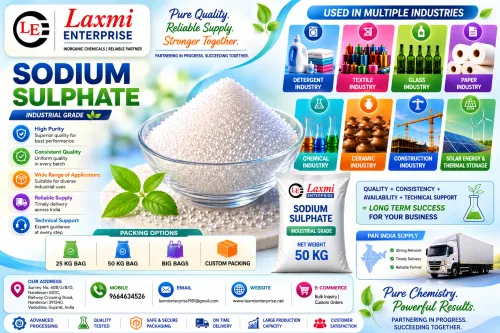
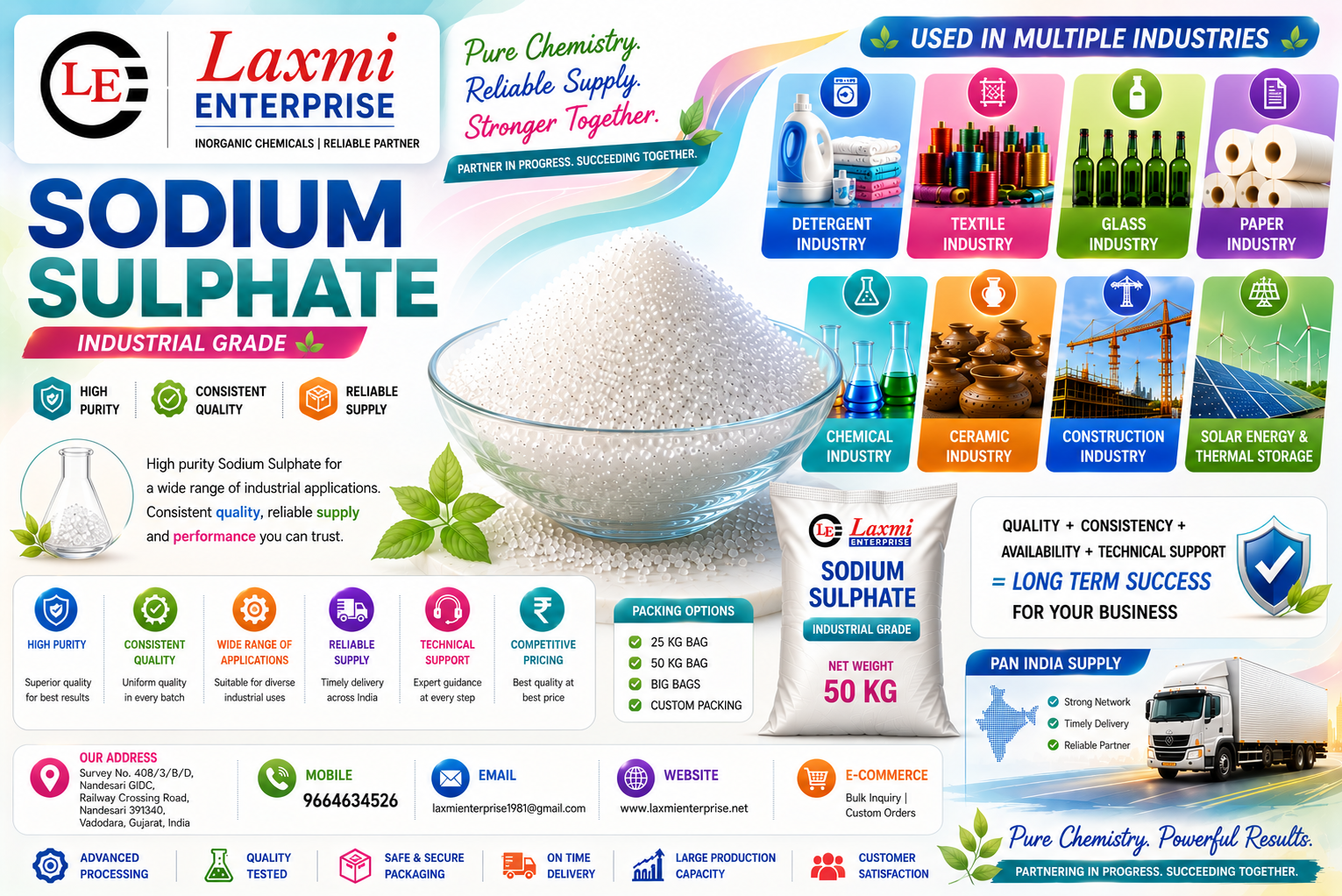
Operating from Nandesari GIDC, Vadodara, we supply Sodium Sulphate and other industrial chemicals to manufacturers across India.
Many of our longest customer relationships have continued because we encourage open communication and welcome constructive feedback.
We understand that manufacturing expectations continue changing.
Customer requirements evolve.
Industries become more competitive.
Our responsibility is to continue improving alongside our customers.
That commitment to continuous improvement remains one of the foundations of our business.
Final Thoughts
Manufacturing excellence is achieved through continuous improvement.
The same principle applies to supplier relationships.
Businesses that regularly measure supplier performance make better procurement decisions.
They identify opportunities earlier.
They strengthen communication.
They build more dependable supply chains.
Ultimately, the objective is simple.
Create partnerships that help both companies grow together.
Reliable suppliers appreciate constructive evaluation because improvement benefits everyone involved.
Frequently Asked Questions
Why should manufacturers measure supplier performance?
Regular performance reviews help manufacturers improve supply chain reliability, strengthen communication, identify improvement opportunities and support better procurement decisions.
What should be included in a supplier scorecard?
Delivery performance, product consistency, packaging, documentation, communication, responsiveness, technical support and overall customer service should all be evaluated.
Who should participate in supplier evaluations?
Procurement, production, quality control, warehouse and management teams should all contribute because each department experiences supplier performance differently.
How often should suppliers be reviewed?
Most manufacturers benefit from conducting a structured supplier performance review at least once every year while monitoring key performance indicators throughout the year.
Why do manufacturers across India choose Laxmi Enterprise?
Manufacturers across India choose Laxmi Enterprise because we believe long-term partnerships are built through consistent quality, dependable deliveries, transparent communication and continuous improvement. Operating from Nandesari GIDC, Vadodara, we remain committed to helping customers strengthen their manufacturing operations through reliable industrial chemical supply.
About Laxmi Enterprise
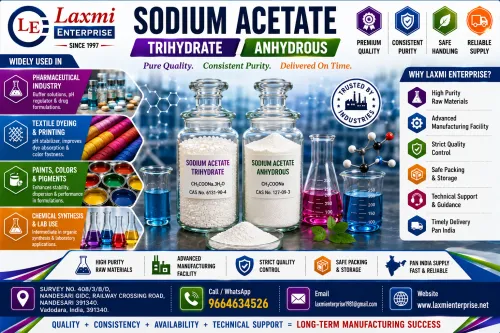
Laxmi Enterprise is a trusted manufacturer, supplier and distributor of industrial chemicals based in Nandesari GIDC, Vadodara, Gujarat. We supply Sodium Sulphate, Sodium Nitrate, Sodium Acetate, Tri Sodium Phosphate and a comprehensive range of industrial chemicals to manufacturers across detergent, textile, glass, paper, ceramic, construction, water treatment and chemical processing industries throughout India.
For decades, we have focused on one objective: building long-term relationships through dependable quality, reliable deliveries and professional customer support. Every improvement we make is designed to help our customers manufacture more efficiently and grow with confidence.